Short answer: for most people with knee trouble, a bed about 24 to 30 inches tall removes the need to kneel. Choose near 30 inches if you garden standing up, and near 24 inches if you garden seated. Published figures vary, so measure yourself before you buy.
Match the height to how you garden
| How you work | Height to look at | Width limit |
|---|---|---|
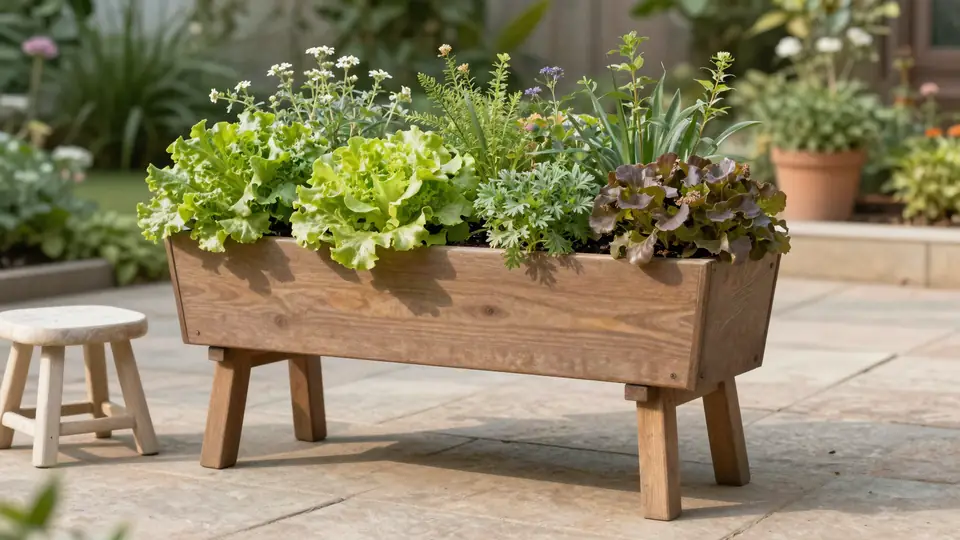
| Standing, trouble bending | About 30 in, or a planter on legs at 30–36 in | 4 ft if you reach from both sides |
| Sitting on the bed edge | About 18–20 in with a wide cap board (our estimate, based on typical chair height) | 3–4 ft |
| Seated on a chair or stool | About 24 in | About 3 ft |
| Wheelchair user | About 24 in for a solid bed, or a legged planter with knee clearance | About 3 ft, with room to roll under where possible |
Oregon State University Extension describes wheelchair-user beds at about 2 feet high, or raised to about 3 feet on legs. The University of Guam suggests 24 inches for taller crops such as tomatoes and a maximum of 30 inches for shorter ones. A tall plant in a tall bed quickly goes out of reach, so bed height and crop height work together.
Measure yourself first
- Stand or sit the way you plan to garden.
- Let your arm hang, then bend your elbow slightly as if holding a trowel.
- Measure from the ground to your hand. The soil surface should sit near this height or a little below it.
- Reach forward without twisting and measure that reach. Your bed should be no wider than this if you reach from one side, or twice this if you reach from both.
What a tall bed costs in soil
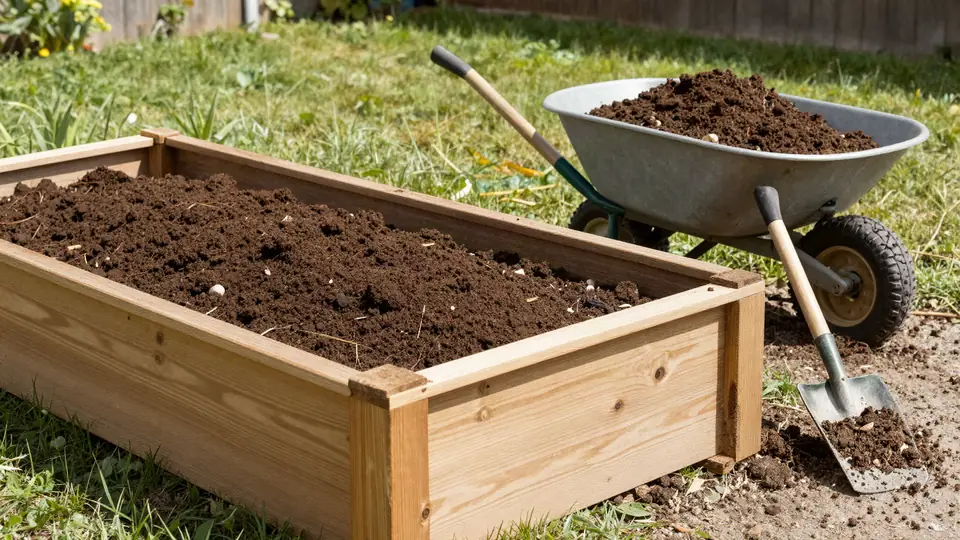
Height is expensive. A 4 × 8 bed needs 32 cubic feet of soil at 12 inches deep, but 80 cubic feet at 30 inches. That is about 54 bags of 1.5 cubic feet each.
You rarely need 30 inches of good soil. Most vegetables do well with 12 inches or so of quality mix. Two ways to fill a tall bed for less:
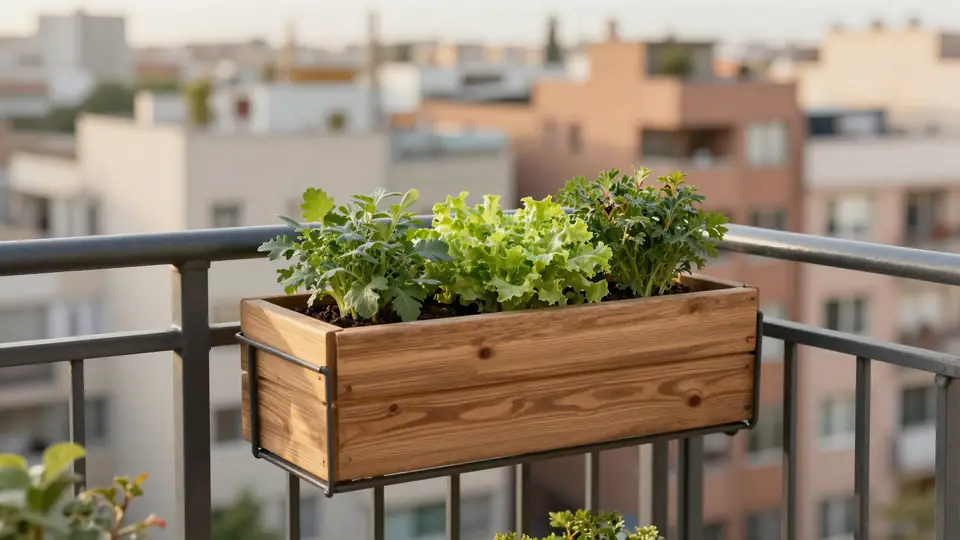
- Elevated planter on legs. The soil box is only 8 to 12 inches deep and sits at working height. Check the maker's weight limit and choose shallow-rooted crops such as lettuce, herbs and radishes.
- Filler layer in a solid bed. Coarse untreated logs and branches can take up the lower part of the bed. Expect the fill to settle and top up with soil over time.
What to look for when you buy
If you garden standing
Look for an elevated planter with its soil surface near 30 inches and a stated load rating. See elevated planters on Amazon.
If you want to sit on the edge
Look for a kit with a wide top rim, or add your own cap board. Confirm it is rated to carry a person, as many are not. See beds with seat ledges on Amazon.
If you want a deep bed
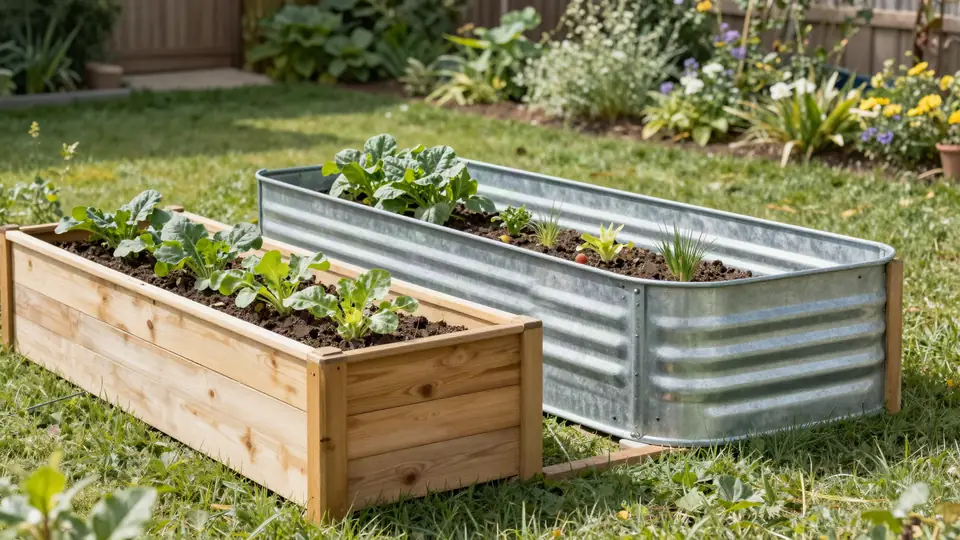
Tall metal beds of about 30 inches are common. Check that they have internal bracing, which stops long sides from bowing. See 30-inch metal beds on Amazon.
This guide is about garden layout, not medical care. If your knee pain is new or getting worse, or if you have balance concerns, ask a clinician or occupational therapist what is safe for you.
Don't forget the paths
A comfortable bed still fails if you can't get to it. Firm, level paths matter as much as bed height. For wheelchairs, the University of Guam suggests 4 to 5 feet between beds so you can turn around.