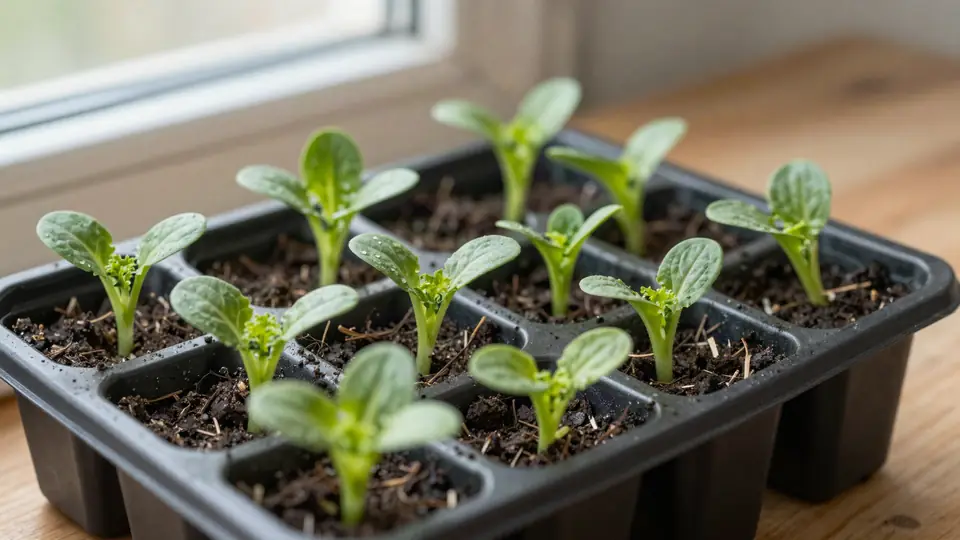
The seed starting sequence
- Find your average last frost date. Your local extension office is a good source. Remember that it's an average, not a promise.
- Count back. The seed starting calendar turns your frost date into sowing dates. The packet for your variety has the final say.
- Add bottom heat for warm-season crops. A heat mat speeds up peppers and tomatoes. Cornell's factsheet suggests a thermostatically controlled mat made for plants.
- Move to light when they sprout. Take trays off the heat once seedlings appear, then give them about 14 to 16 hours of light. Windowsills are rarely enough. See our seedling shelf guide.
- Harden off. Introduce tender plants to outdoor conditions gradually over a week or so before transplanting.
What you actually need
| Item | Need it? | Why |
|---|---|---|
| Seed-starting mix | Yes | Fine and light. Garden soil is too heavy for trays. |
| Cell tray and drip tray | Yes | A standard 10 × 20 tray fits most inserts and domes. |
| Light and timer | Yes, for most homes | Stops stems from stretching. |
| Heat mat with thermostat | For peppers, eggplant and tomatoes | Faster, more even germination. |
| Humidity dome | Helpful | Remove it once seeds sprout. |
| Small fan | Helpful | Moving air can reduce damping-off and strengthen stems. |
Guides by problem
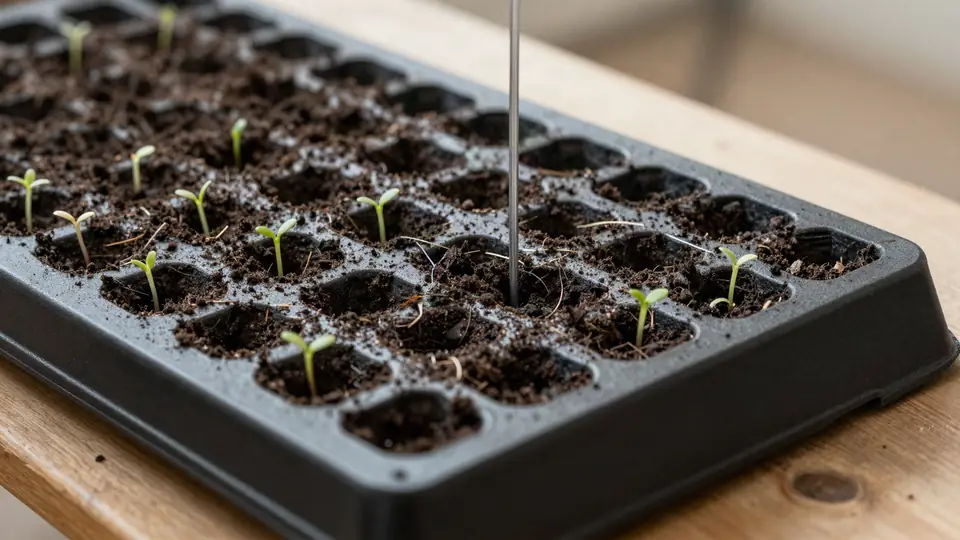
Seed Starting
Heat mat size for a 72-cell tray
A fit chart by tray count, and why a thermostat matters.
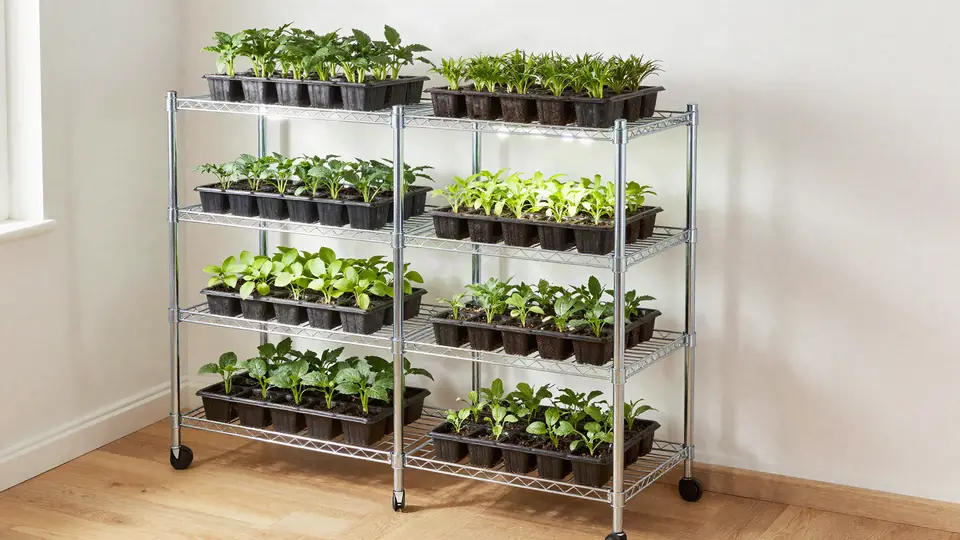
Seed Starting
Seed starting rack for an apartment
How many trays fit on a rack, plus power, water and humidity.
Ready to shop?
Start with durable trays that you can reuse for years. See heavy-duty seed trays on Amazon.