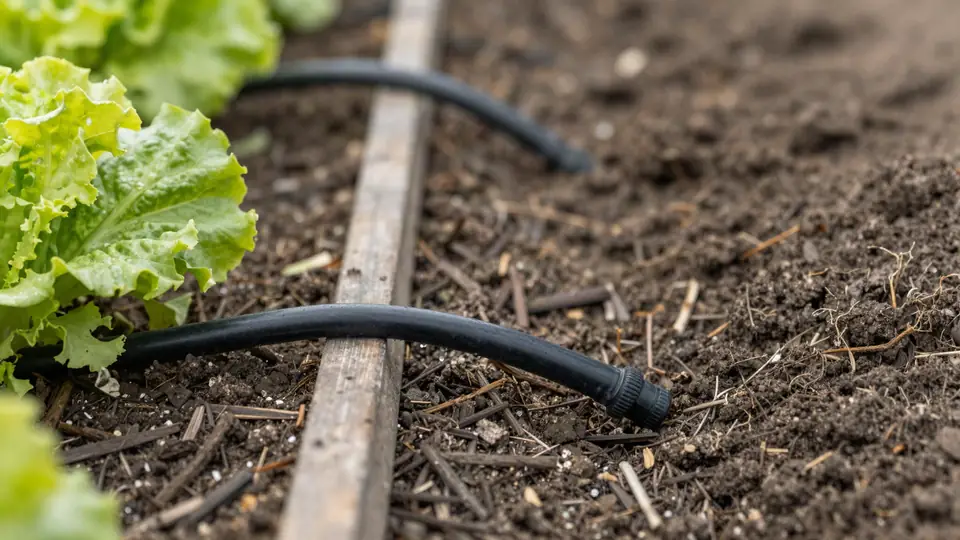
Choosing a watering method
| Method | Best for | Trade-off |
|---|---|---|
| Hand watering | One or two small beds | Takes time and depends on your schedule |
| Soaker hose | Short, level runs | Output can be uneven along the length |
| Drip tubing with emitters | Several beds; precise and easy to automate | Needs a filter and regulator, plus some setup |
| Gravity-fed rain barrel | Sites with no tap nearby | Very low pressure, so choose parts made for it |
A drip system puts water at the soil surface. Tennessee State University Extension notes that emitters are commonly spaced at 4, 8 or 12 inches, with 12 inches the most common for home gardens. To size a system, use the drip line calculator.
How much water is an inch?
One inch of water over one square foot is 0.623 gallons. A 4 × 8 bed has 32 square feet, so an inch of water is about 20 gallons. Knowing this makes it far easier to set a timer sensibly.
Ways to extend your season
| Option | What it does | Main chore |
|---|---|---|
| Row cover over hoops | Adds light frost protection; keeps out some insects | Securing it in wind |
| Cold frame | Traps solar heat for spring, fall and some winter crops | Venting on sunny days |
| Plastic low tunnel | Warms up a whole bed | Venting, and clearing snow |
Guides
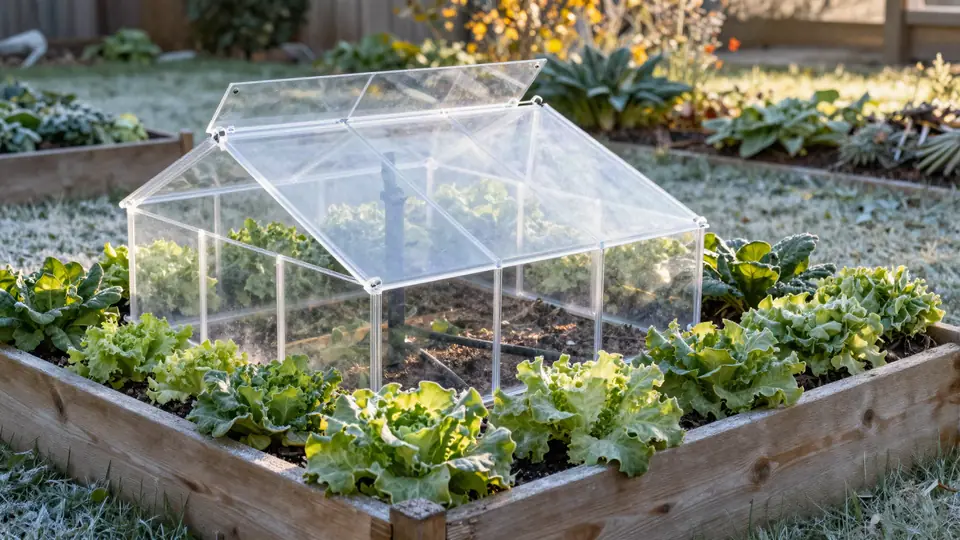
Watering & Season
Cold frame for a 4×8 raised bed
Sizing, venting and alternatives for a full-size bed.
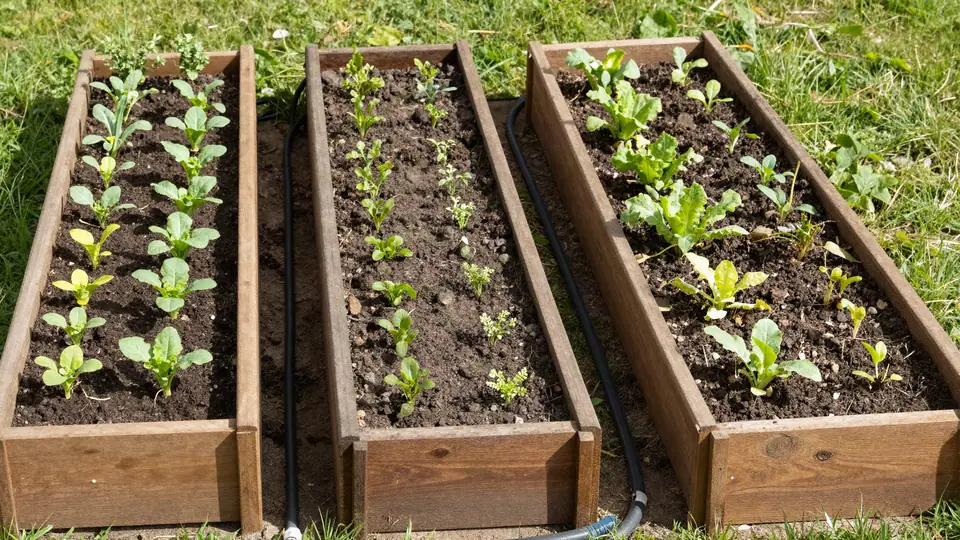
Watering & Season
Drip irrigation for four 4×8 beds
A worked layout with tubing length, flow and run times.
Ready to shop?
Choose a kit based on your bed count and layout, not on the biggest number on the box. See raised bed drip kits on Amazon.